Service design · UX strategy · Onboarding
Reframing user registration: from a form into an end-to-end journey
30% vs 5% projected
registration after launch
20 → 10 min
time spent on registration
112
users surveyed, plus on-site visits, interviews and beta tests
Context
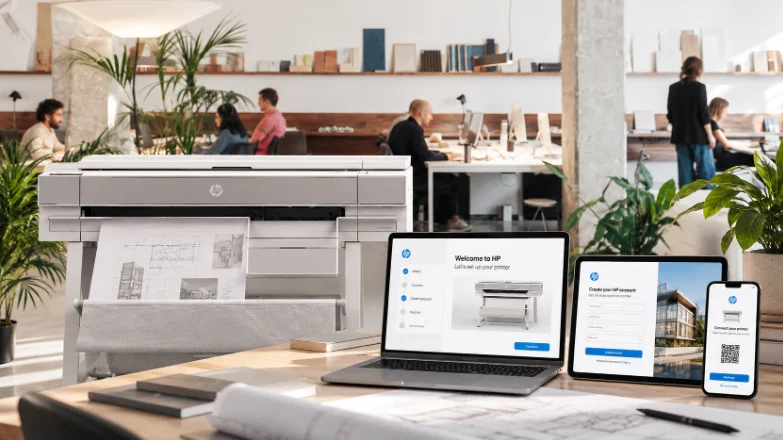
HP's large-format printers used to collect usage telemetry by default. New privacy regulations required consent-based data collection.
HP could only access usage data if users created an HP account and registered their device, and registration was initially projected at 5%.
The challenge
Design an onboarding and activation strategy that would significantly increase registration. In the architectural studios we studied, three constraints stood out:
- Long physical assembly before digital setup begins
- Low motivation to register after a demanding setup
- Multiple roles (office managers, architects, interns) sharing the same device
Strategic approach
Rather than forcing registration into the flow, I reframed the problem as a role-based activation strategy across the whole journey.
- Ask at the right moment: before and after assembly, when perceived value is highest.
- Design for the real roles: the person setting up the printer isn't the person using it.
- Keep learning after launch: measure adoption and iterate with evidence.
01
Grounded the work in research across regions.
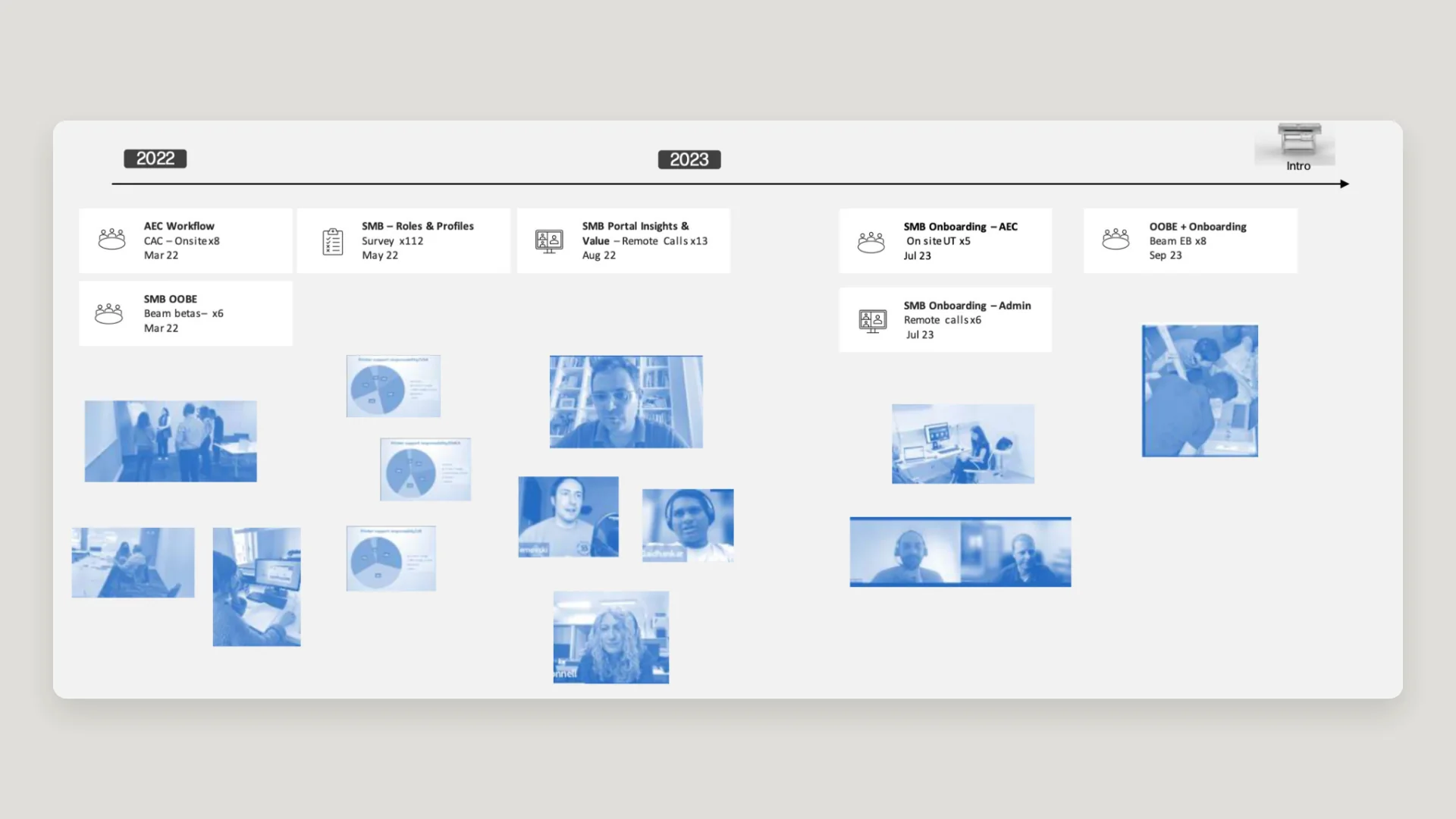
Between 2022 and 2023 I led on-site workflow visits, beta tests, a survey of 112 users, remote interviews and on-site usability tests. It revealed two barriers:
- Ownership: office managers registered one company account, so HP lost visibility of the architects using the printer.
- Timing: after the long setup, users just wanted to start printing.
02
Aligned teams around a North Star, not a list of features.
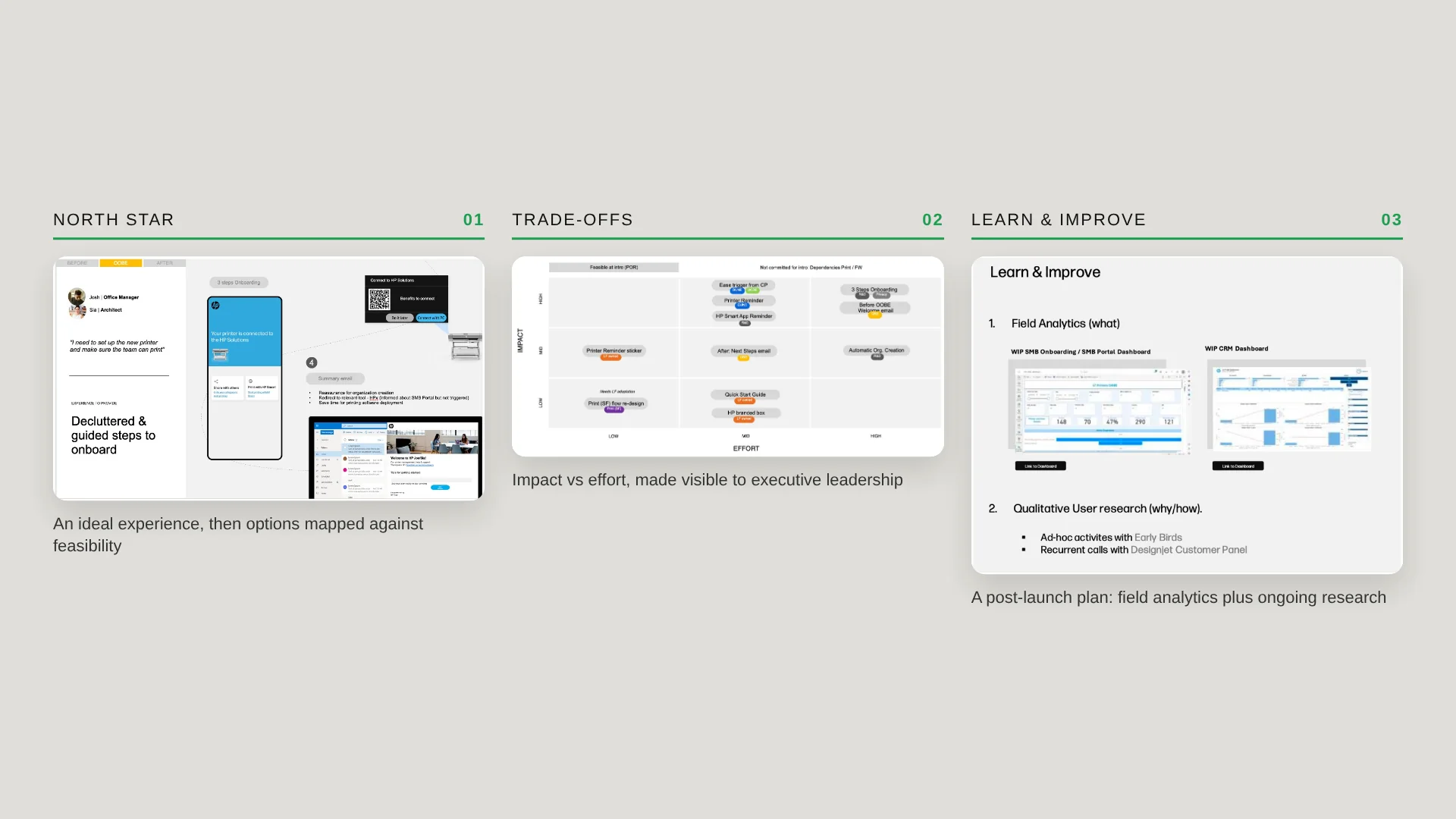
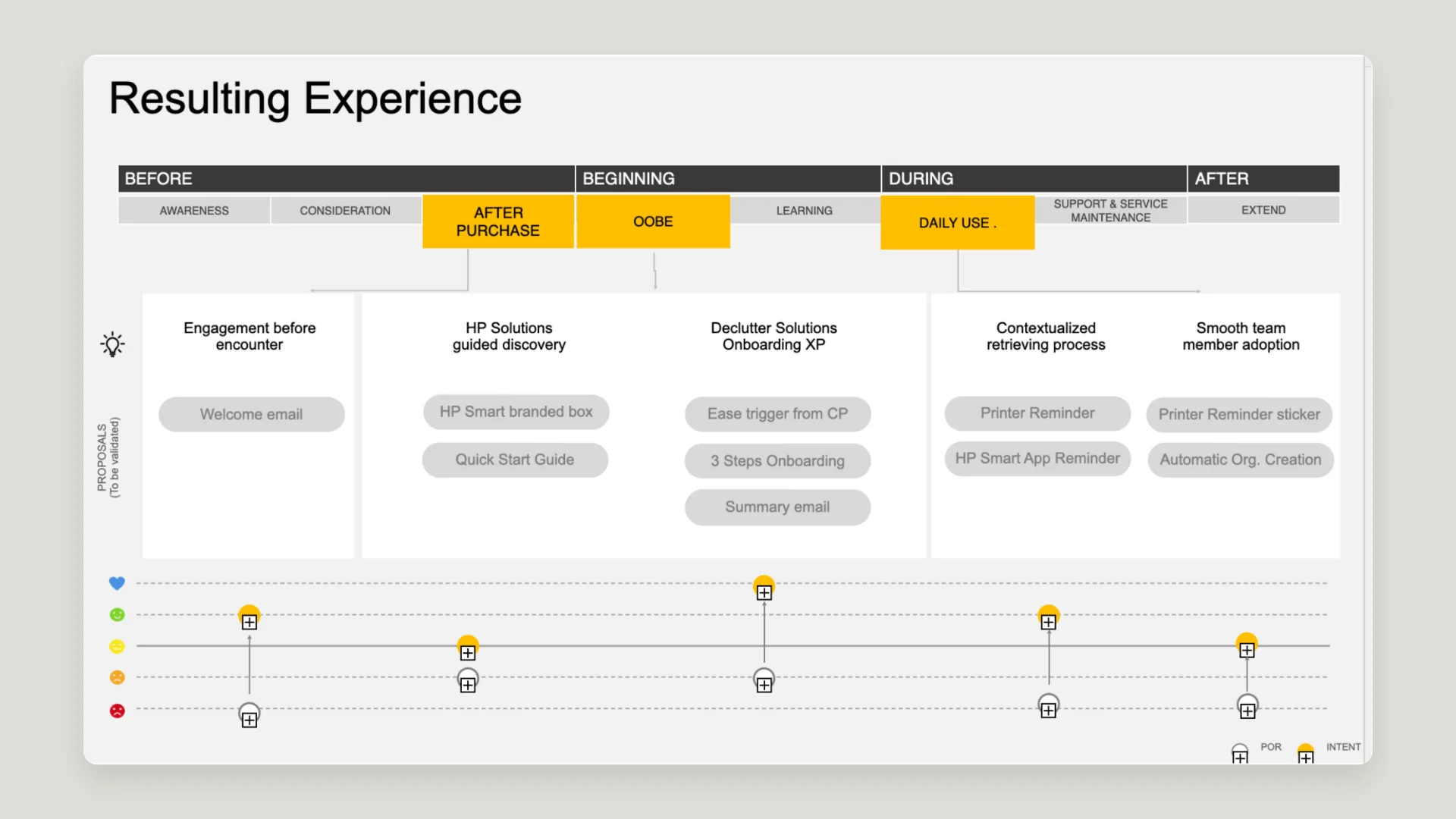
A hardware-first mindset made experience improvements hard to prioritise. I proposed an ideal end-to-end experience, mapped the options against technical feasibility, made resource constraints visible to executive leadership, and set up a post-launch plan to learn from real adoption.
03
Moved registration to the moments of highest value.
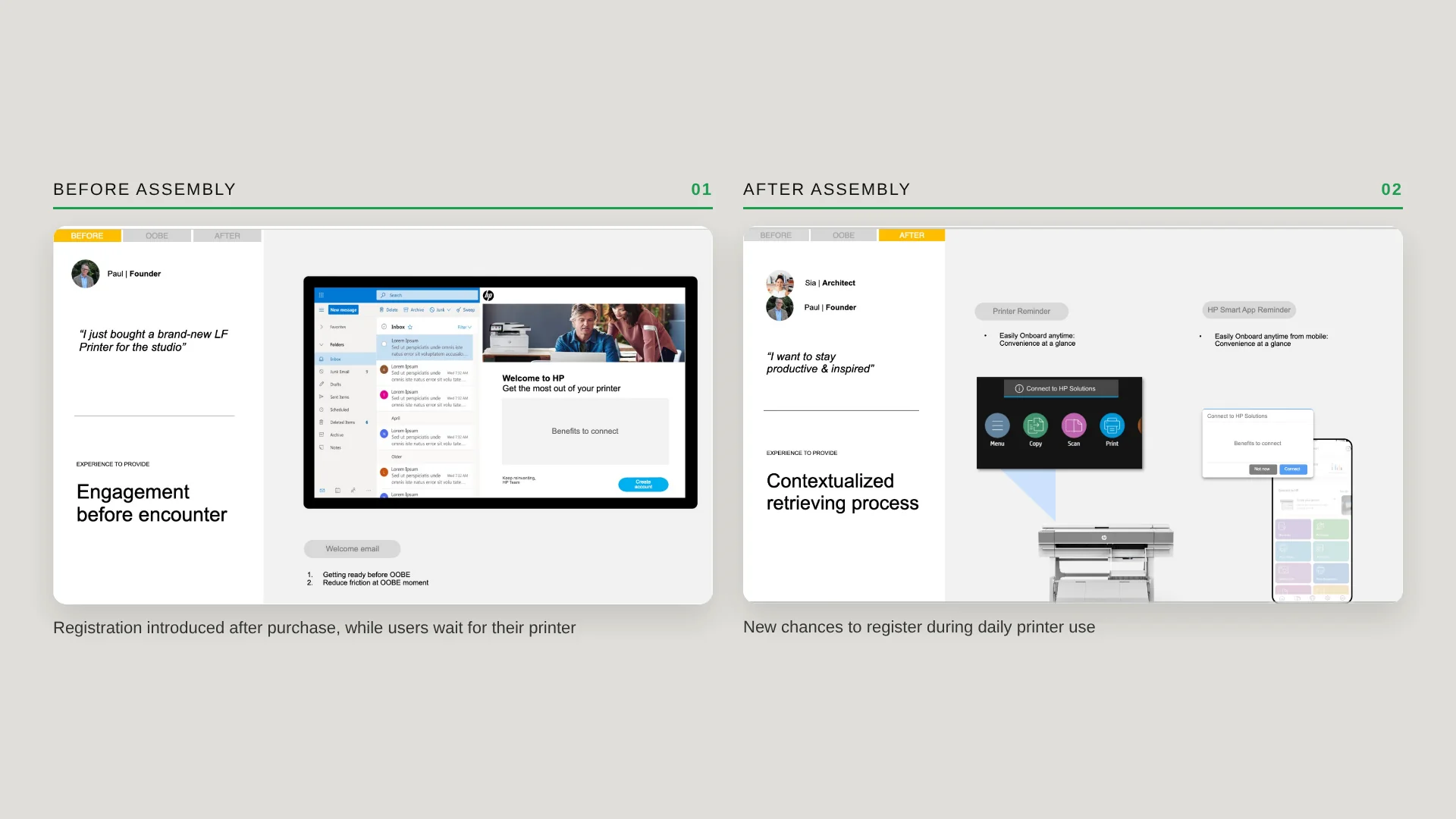
Before assembly, after purchase, while users wait for their printer. After assembly, with reminders on the printer's control panel and in the HP Smart app during daily use.
04
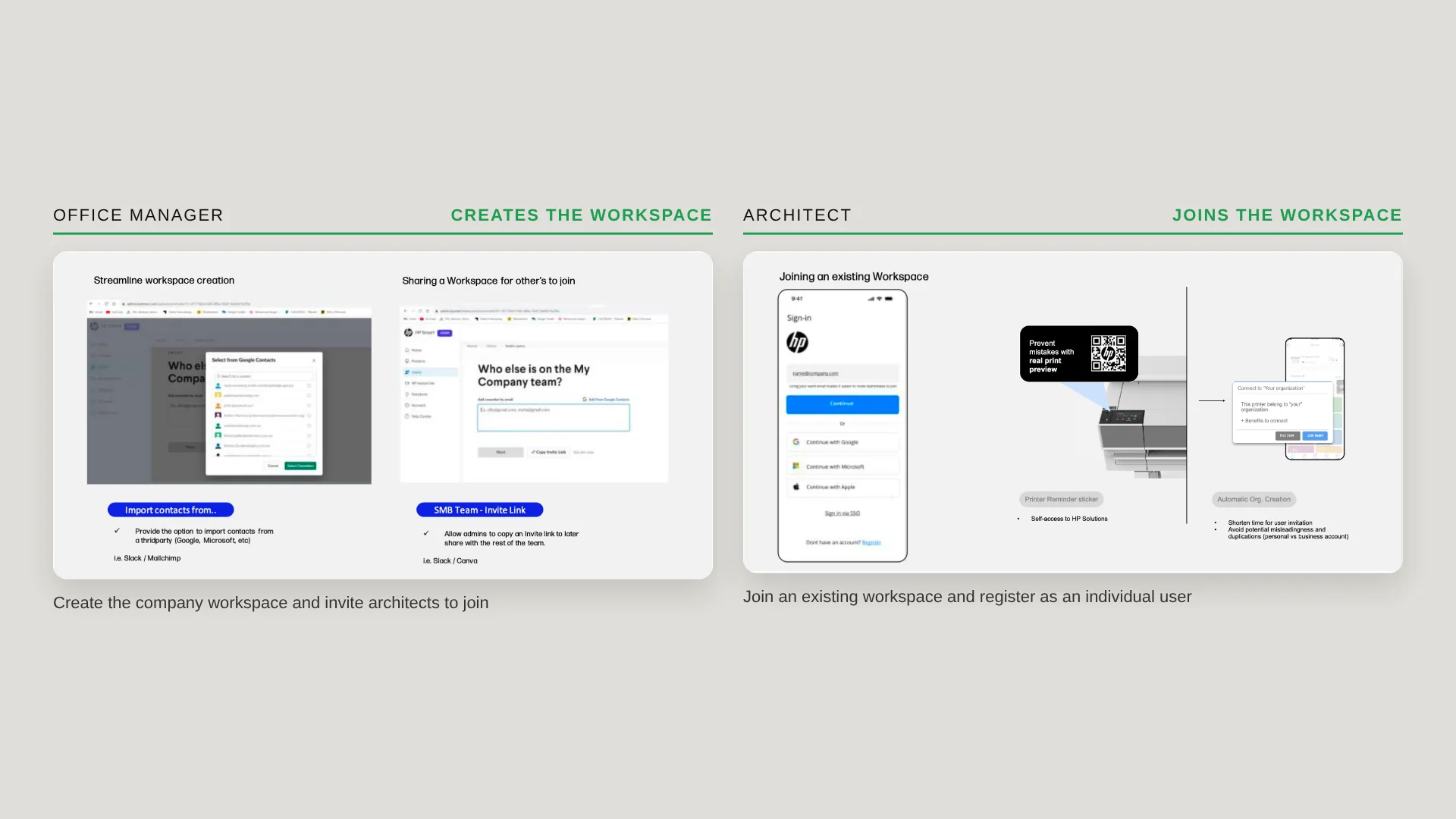
Designed for the real roles behind every printer.
Office managers create the company workspace and invite their team. Architects join the workspace and register as individual users, so HP gained visibility of the wider team.
05
Connected it into one experience, and validated it.
With Hardware CX and the UI Lead, I brought the touchpoints together into one journey, simplified the flow, and iterated on placement and messaging through usability and beta testing.
Impact
Registration reached 30% after launch, far exceeding the 5% projection.
Better timing and less friction halved the time spent on registration, from 20 to 10 minutes.
Higher registration unlocked behavioural data, helping product teams understand usage patterns and inform roadmap decisions.
Reflection
The biggest lever wasn't a better form. It was understanding the full service around the printer.
Who sets it up, who uses it, and when they're ready to engage. Making trade-offs visible to leadership turned a hardware-first conversation into an experience-first one.
Let's talk.
Available for service design, UX strategy, product discovery and fractional UX leadership. Remote across Europe & UK.