Using BNPL to Increase Affordability Perception, Conversion, and Traffic Acquisition at HP
🧭 Context
HP sells high-value consumer electronics such as laptops, monitors, and printers across a global e-commerce ecosystem. Because these products represent a significant financial commitment, affordability perception plays a critical role in purchase completion—especially in the final stages of checkout.
At the same time, Buy Now Pay Later (BNPL) solutions were rapidly gaining adoption across e-commerce, particularly among younger audiences expecting flexible payment options.
This created an opportunity to reposition financing not just as a payment method, but as a conversion lever across the purchase journey.
🔍 Problem Framing
Initial analysis revealed that financing options were surfaced only during the payment step of checkout, when hesitation was already high due to the total purchase cost.
However, research showed that affordability is evaluated much earlier in the decision journey.
Users were asking:
“Can I afford this product?”
while browsing product pages—not when entering payment details.
At the same time:
users leaving the site to evaluate financing often did not return
cart abandonment remained high
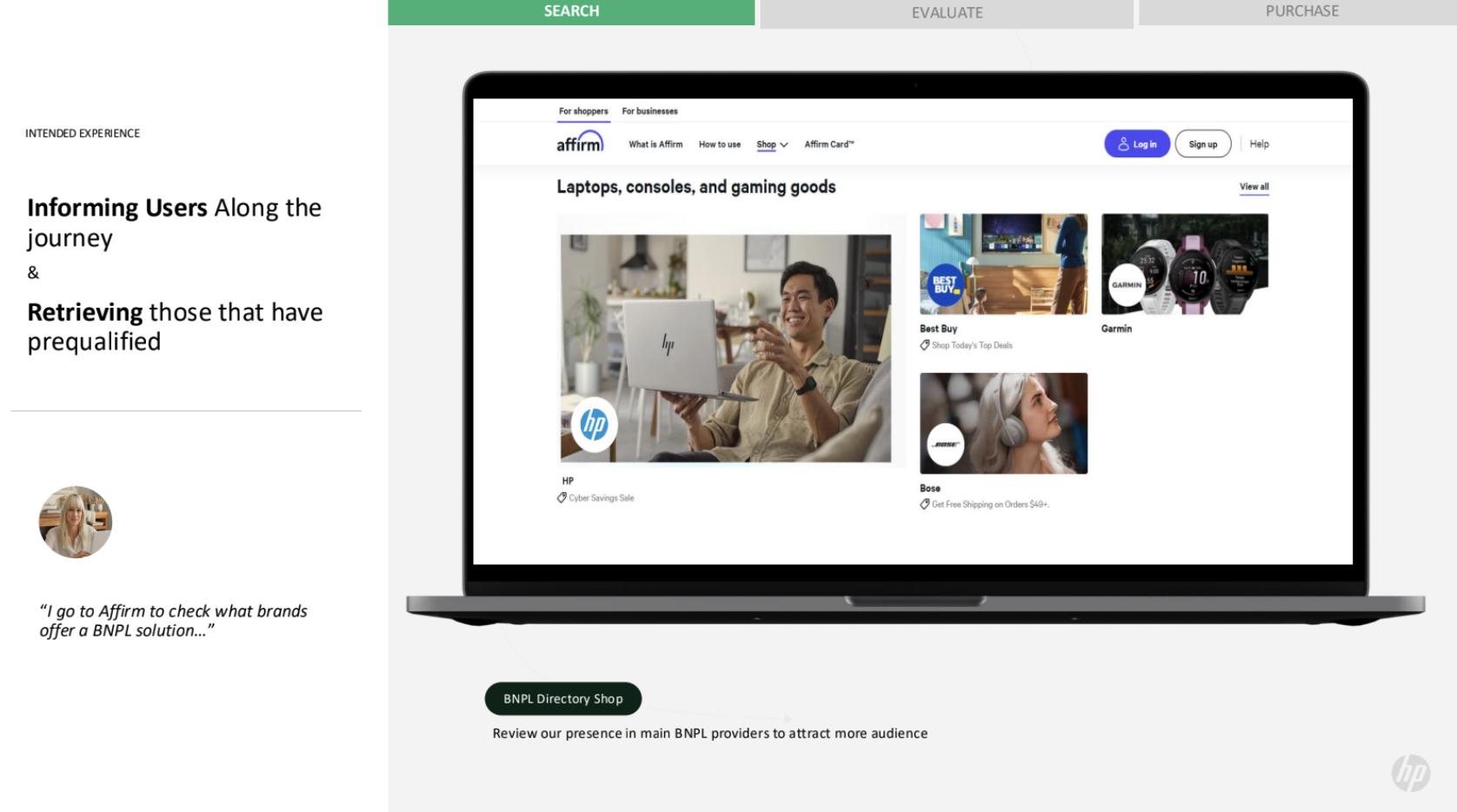
some customers started their journey directly inside BNPL ecosystems like Klarna or Affirm
This suggested that BNPL should be treated as a journey-level capability, not a checkout-only feature.
👩💼 My Role as UX Lead
I led the UX strategy for integrating BNPL across HP’s global e-commerce experience.
My responsibilities included:
defining the experience strategy for BNPL integration across the purchase journey
leading research on financing behavior in online purchasing
identifying opportunity areas beyond checkout (PDP, cart recovery, partner ecosystems)
designing cross-touchpoint integration across product page, cart, checkout, and lifecycle communication
aligning product, engineering, and business stakeholders around rollout priorities and impact expectations
This initiative required balancing conversion optimization, partner constraints, and cross-market scalability.
🎯 Strategy & Hypothesis
Instead of introducing BNPL as a checkout-only payment option, I framed it as an affordability visibility strategy across the entire journey.
The experience strategy focused on three principles:
1. Increase affordability visibility earlier in the journey
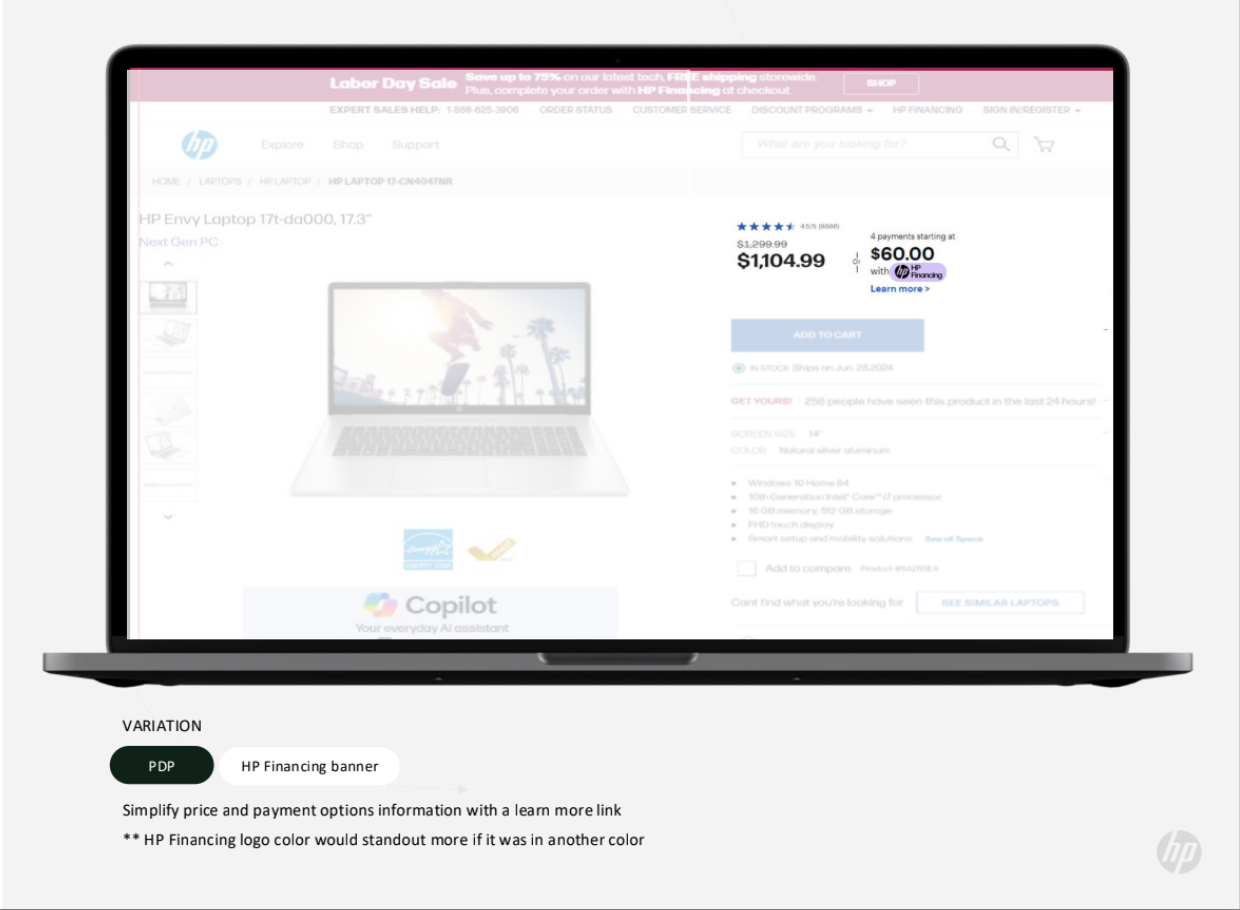
Expose monthly payment estimates directly on product pages to help users mentally reframe price perception.
2. Reduce purchase hesitation at decision moments
Provide transparent installment information before checkout commitment.
3. Extend BNPL beyond checkout into recovery and acquisition channels
Leverage financing messaging in abandoned cart emails and BNPL partner ecosystems as additional conversion drivers.
Hypothesis:
If affordability is surfaced earlier and consistently across the journey, users will experience lower hesitation and higher purchase confidence—leading to increased checkout completion.
🧠 Concept Exploration
Before defining the final experience, I explored multiple integration strategies:
checkout-only payment integration
product-page affordability messaging
cart-stage reinforcement
lifecycle-based financing reminders
BNPL ecosystem visibility as an acquisition channel
Rather than concentrating impact at a single step, I prioritized a distributed affordability strategy across key decision points.
This approach ensured that financing supported both:
conversion improvement
traffic acquisition through partner ecosystems
🧩 Experience Design Decisions
The integration was intentionally designed across multiple touchpoints to support decision-making progressively.
Product page
Monthly payment estimates were displayed alongside the product price to support early affordability evaluation.
Why
Users evaluate purchase feasibility during browsing—not during payment.
Outcome
Reduced early hesitation and increased confidence continuing toward checkout.