
PRODUCT STRATEGY · CRO · PAYMENTSFrom a checkout feature to a journey-level capability
HP sells high-value products such as laptops, monitors, and printers. The cost of premium devices often creates purchase hesitation at the final stages of the journey.
We explored how introducing BNPL could improve affordability perception, increase checkout conversion, and attract new customers seeking flexible payment options.
How I led it (in a nutshell)
Reframed the problem with research and a benchmark. I analysed how Apple, Samsung, Best Buy, Walmart and others integrate financing, and how users actually evaluate it. They judge affordability early, often leave to check eligibility and don’t come back, and some start their search on BNPL platforms.
Defined a journey-level strategy. I mapped the touchpoints from discovery to re-engagement around two questions: how might we make financing visible early, and how might we bring back users who have already prequalified?
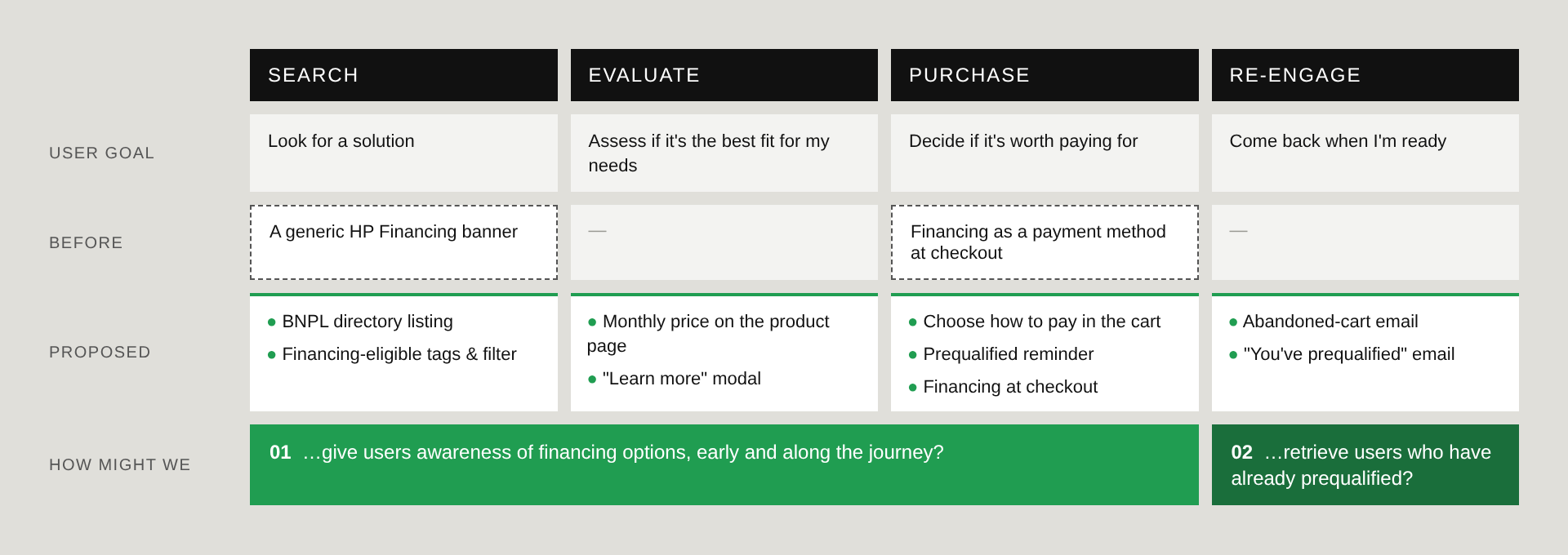
3- Aligned Product, Tech, Experimentation and Legal around a phased plan. In a Share → Discuss → Decide session, we agreed to ship the low-risk touchpoints first, test the uncertain ones and keep the changes with bigger dependencies as proposals.
Understanding the problem
To inform the strategy, we explored how users evaluate financing options during online purchases. Through research and behavioral analysis, we identified three key patterns.
01
Financing is evaluated early in the purchase journey
Users often discover financing options too late, typically during the payment step in checkout. At that moment, hesitation is already high due to the total purchase cost.
However, affordability is evaluated much earlier in the decision process.
Users want to understand:
“Can I afford this product?”
while browsing the product page, not only when they are about to pay.
Implication
BNPL should not be treated solely as a checkout payment option. It should appear earlier in the journey, particularly on product pages and the cart.
Showing estimated monthly payments helps users mentally reframe the purchase as a manageable commitment.
02
Financing exploration can lead to cart abandonment
Some users explored BNPL eligibility during the journey but left the site before completing their purchase.
This aligns with industry data showing that more than 70% of online shopping carts are abandoned before purchase completion.
When users leave to check financing options or evaluate affordability, they may not return to finish the purchase.
Implication
BNPL needed to be integrated not only into the purchase flow but also into cart recovery strategies.
One opportunity identified was to incorporate BNPL messaging into abandoned cart emails, highlighting that the user could complete the purchase using flexible payment options or that they may be pre-qualified for financing.
This reframes cart recovery from a simple reminder to an affordability nudge.
Another behavior emerged: some users start their purchase journey directly on BNPL platforms such as Klarna or Affirm, browsing merchants that offer installment payments.
For these users, the first question is not:
“Which product should I buy?”
but rather:
“Which brands allow me to pay this way?”
Implication
BNPL providers should be considered distribution channels, not only payment integrations.
This created opportunities to strengthen HP’s visibility within BNPL ecosystems and potentially drive additional traffic to HP’s online store.
03
BNPL providers act as discovery platforms
Strategic Approach
Rather than introducing BNPL as a single checkout feature, we approached it as a journey-level capability. The strategy focused on three principles:
1. Increase affordability visibility by introducing financing information earlier in the journey.
2. Reduce purchase hesitation by providing clear, transparent monthly payment estimates.
3. Extend BNPL beyond checkout to leverage financing options in recovery flows and partner ecosystems.
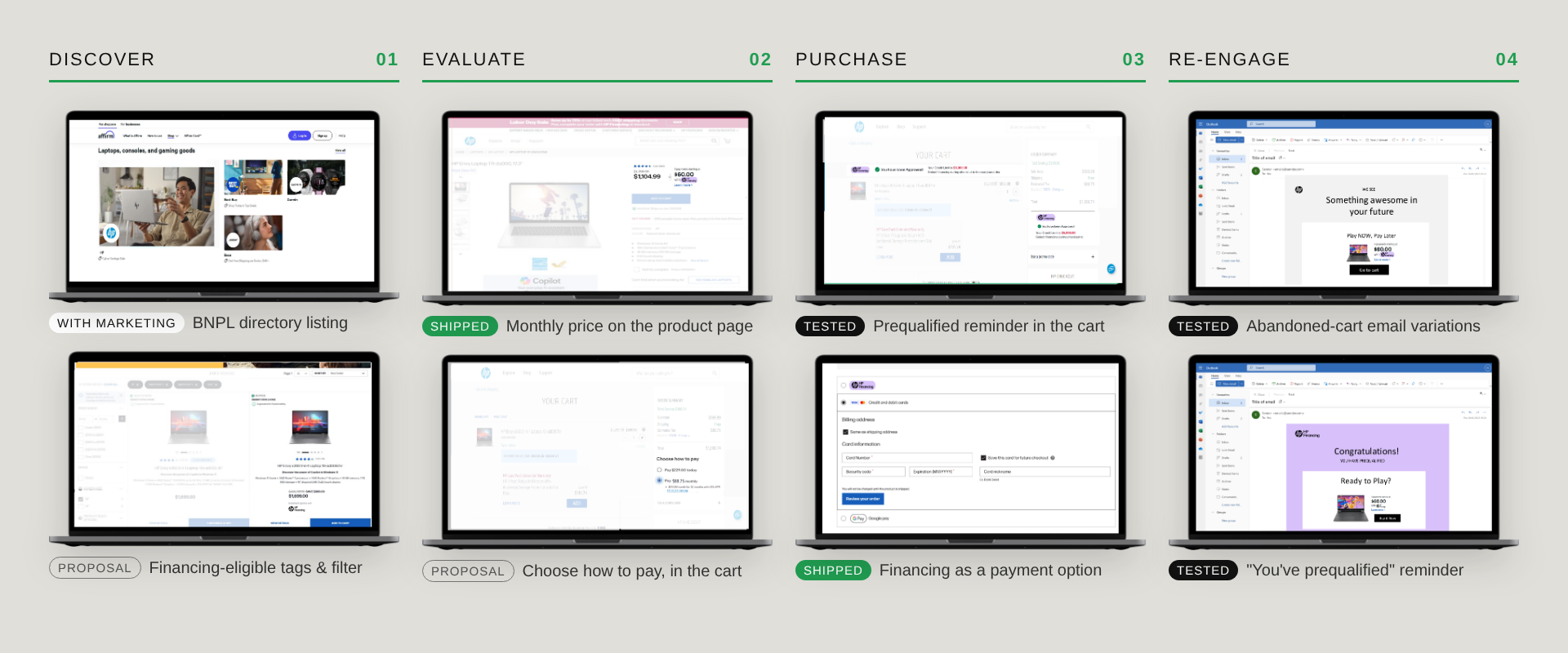
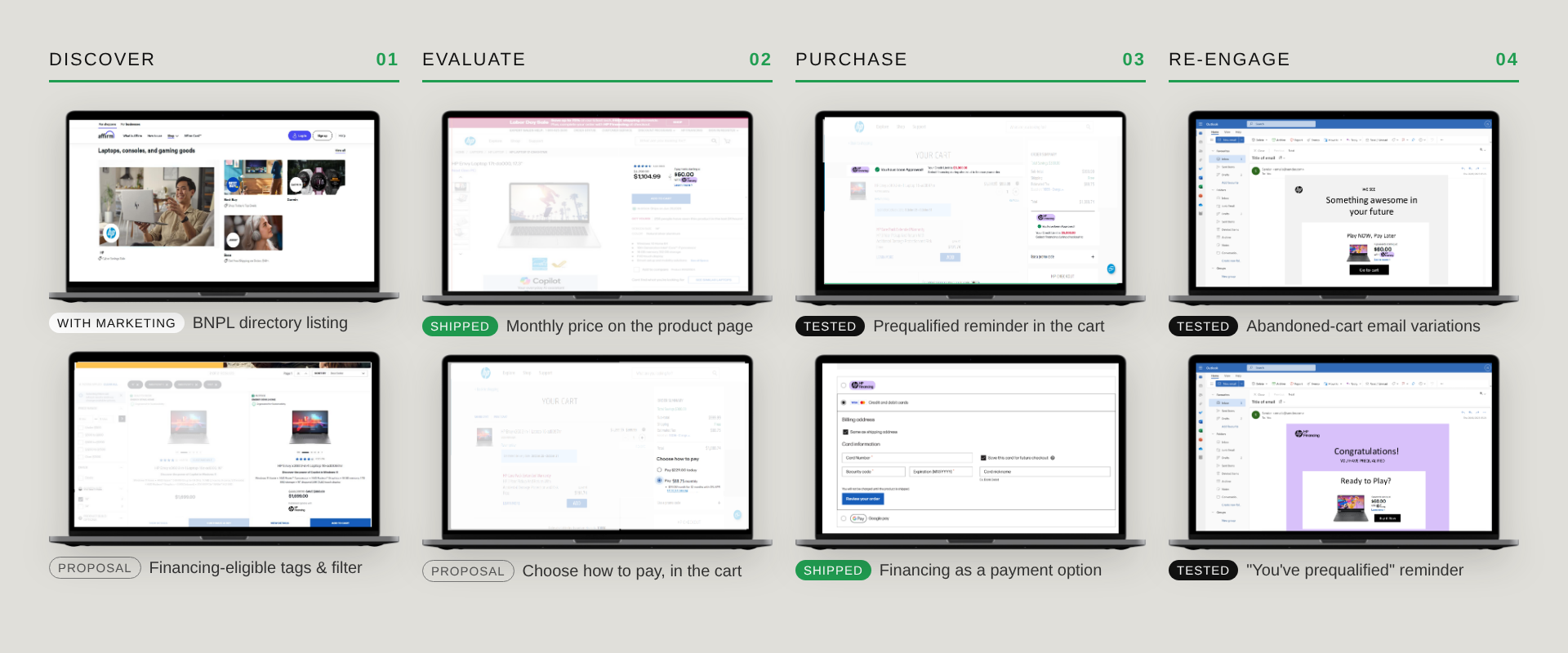
I proposed a set of touchpoints along the journey. That let the team prioritise by impact and feasibility:
Ship first the touchpoints with clear value and low risk: the monthly price on the product page, and financing at checkout.
Test the touchpoints that needed evidence: the prequalified reminder and abandoned-cart email variations, run with the Experimentation team.
Keep as proposals the options with bigger dependencies. “Choose how to pay” in the cart would change the checkout flow and only works with providers that don’t require prequalification.
Experience Design
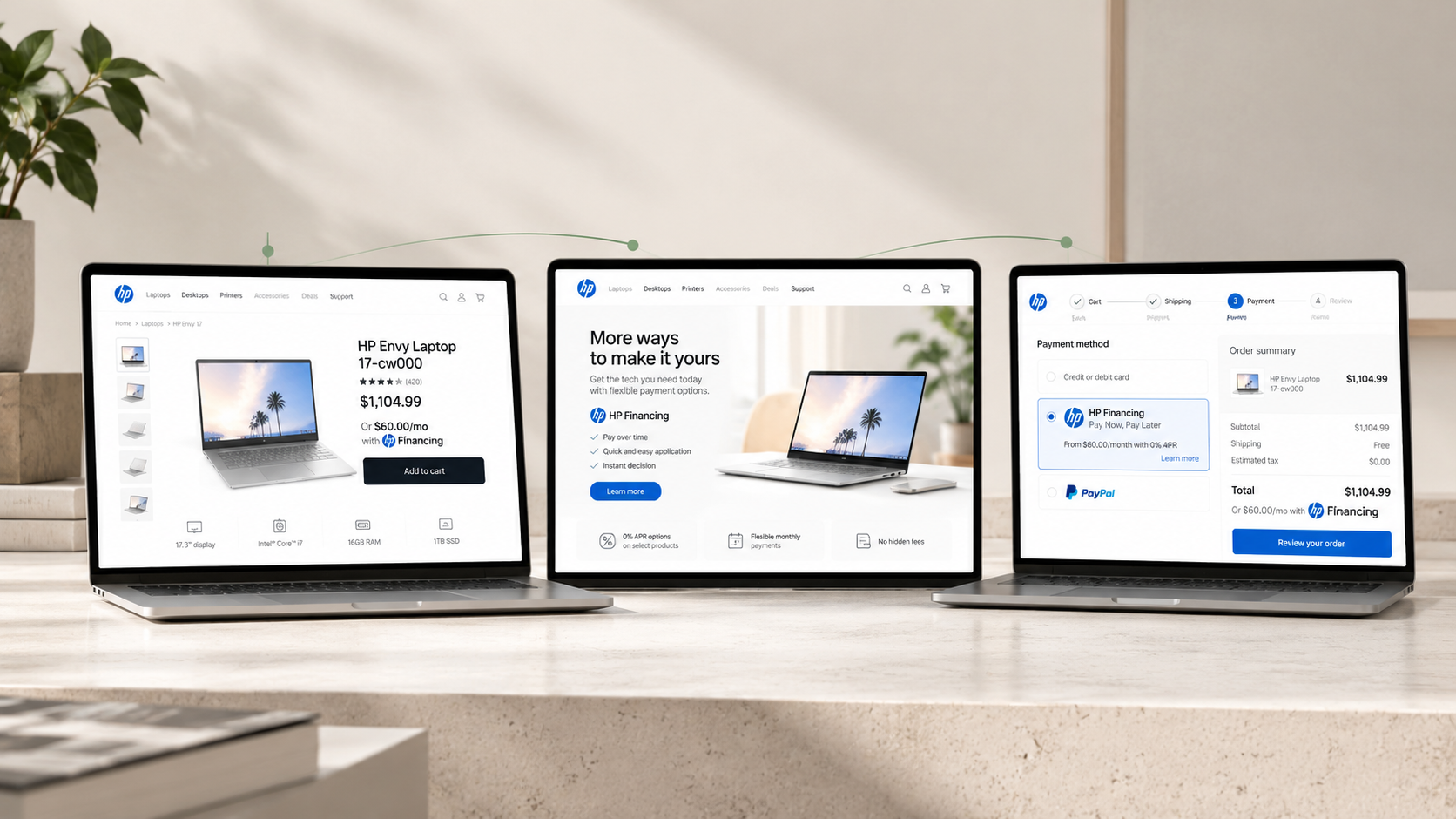
The integration was designed across multiple touchpoints of the purchase journey.

Product Page
Users could see estimated monthly payments alongside the product price, helping them immediately evaluate affordability.

Cart
Financing options reinforced the possibility of splitting payments before entering checkout.

Checkout
BNPL appeared as a clear payment option alongside traditional methods.

Reminder email
BNPL appeared as a clear payment option alongside traditional methods.
Impact